
Most people grow up hearing that good sex is all about fireworks: strong orgasm, high frequency, wild positions, maybe a little improvisation in the bedroom. If pleasure hits a certain level, the label “good sex” goes on by default, and anything less satisfying gets pushed into the “bad sex” bucket. Yet when you look at what science, therapists, and people in long-term relationships report, the story gets way more layered. Sex can lift mood, reduce stress, support heart health, and deepen emotional intimacy. Sex can also drain energy, strain the body, trigger anxiety, or quietly erode self-esteem when it is used to escape pain instead of building connection. In other words, the difference between good sex and bad sex has as much to do with context, meaning, and balance as it does with orgasm.
Researchers who study sexuality describe a cycle that moves through arousal, a build-up phase, orgasm, and resolution. Hormones like dopamine, oxytocin, and endorphins wash through the body, shaping how sex feels in the moment and how each partner feels about the encounter afterward. When sex happens in an environment of respect, honest consent, and emotional safety, that chemical storm can reinforce trust and closeness. When sex happens out of pressure, fear of rejection, or a need to numb stress, the same biology can start to glue painful patterns into place. Pleasure still shows up, but it no longer points in a healthy direction. It is more like a bright neon sign covering a crack in the wall. That is why some people report a strong high during sex and a heavy low afterward; the body feels one thing, the deeper mind feels something else.
A healthy sex life also lives on a spectrum. Some couples feel satisfied with infrequent sex because affection, emotional support, and shared values are strong. Other couples enjoy more frequent intimate contact without feeling drained or distracted from the rest of life. Problems tend to appear when sex starts to feel compulsory, when one person’s needs always dominate, or when bodies are pushed past comfort just to meet an idea of what a “normal” sex life should look like. At that point, quantity begins to work against quality. Sexual energy stops feeding passion, care, and curiosity and starts feeding frustration or exhaustion instead.
Good sex, in a more complete sense, is sex that supports overall well-being: physical health, emotional balance, and relational stability. That can include solo exploration, partnered intimacy, and sex-positive tools such as a masturbator, a clitoral vibrator, or a couple’s ring, as long as each choice aligns with consent, respect, and a sense of agency. Bad sex is not only about pain or obvious harm. Bad sex can be sex that looks perfect from the outside but leaves one or both partners feeling unseen, pressured, or empty. Understanding that difference is the foundation for any healthy approach to desire, technique, or erotic products.
What Do We Mean by “Good Sex” vs “Bad Sex”?
When most people try to define good sex, the answer usually circles around pleasure: strong orgasms, high arousal, maybe some romance layered on top. Bad sex then becomes anything that feels flat, uncomfortable, or awkward. That surface-level view misses a lot. Sex is not only a physical act. Sex is also an emotional event and, for many people, a deeply psychological experience. During sex, a huge amount of emotional energy moves through the body and mind. Desire, fear, hope, shame, curiosity, and attachment can all show up in the same encounter. When that energy supports connection, self-respect, and long-term well-being, sex leans toward the “good” side. When it feeds insecurity, stress, or emotional dependence, even a strong orgasm can sit inside a “bad” experience.
Good sex tends to share a few patterns. Consent is clear, not negotiated through guilt or pressure. Each person feels safe enough to relax and to speak up about pace, touch, and boundaries. Bodies are engaged, not pushed beyond comfort just to meet a script. There is room for pleasure, but also room for laughter, small mistakes, and feedback. Afterward, the emotional state feels at least stable, often warmer: more trust, more ease, a stronger sense that the relationship—whether long-term or casual—still honors both people. In many relationships, good sex is not acrobatic or dramatic. Good sex is often grounded, present, and responsive, with enough flexibility to adapt to mood, stress levels, and health.
Bad sex is not only sex that hurts or crosses hard boundaries, although that kind of harm matters and deserves clear language. Bad sex also includes encounters that look consensual on the surface but are driven by fear of being abandoned, a need to prove worth, or a habit of using sex to cover emotional wounds. When sex is used as an escape from stress rather than a way to process and release it, the short-term high can deepen the long-term low. A person might start to feel that sex is the only way to feel loved, or the only way to calm anxiety. Over time, sexual energy that could fuel passion, creativity, and connection gets locked into chasing the next hit of relief. That pattern often shows up as compulsion, irritability when sex is not available, or a growing gap between sexual behavior and personal values.
Good sex and bad sex are not fixed categories. The same act can feel healthy in one context and unhealthy in another. Solo exploration can be a caring way to learn what feels good, or it can become a way to avoid intimacy with a partner. Rough play can be fun when communication is strong and safety is clear; the same intensity can feel violating when someone is already emotionally raw. A long-term couple might go through a season where sex is rare but tender and satisfying, and another season where frequency is high but driven by anxiety or conflict. The key difference is not the position, the toy, or the number of orgasms. The key difference is whether sexual energy supports a balanced inner life and respectful relationships, or whether it pulls both partners away from those goals.
How Sex Shapes Relationships and Emotional Well-Being
Sex and emotional intimacy are tightly linked, but not in a simple “more sex = better relationship” way. Research that tracks couples over time points to something a little more subtle: the quality of sex often shows up in the small affectionate moments that surround it. Partners who share regular kissing, hugging, gentle touch, and warm eye contact tend to report higher relationship satisfaction, and those affectionate habits often increase in the days after a satisfying sexual encounter. Sex, in this sense, works like a amplifier. When the emotional base is caring and respectful, sexual connection can deepen that warmth and make it easier for partners to keep supporting each other in daily life. When the emotional base is shaky or resentful, sex can either feel disconnected or gloss over unresolved problems for a while without truly fixing them.
Affection is important here. Studies that use daily diaries and smartphone check-ins show an interesting pattern: people who report sex in the last day or so also tend to report more affectionate behavior, like cuddling or loving touch, even outside the bedroom. That affection then predicts higher relationship satisfaction for both partners. Sexual contact seems to trigger not only physical pleasure but also a stronger tendency to reach out, be kind, and stay emotionally engaged. Over time, those micro-moments of connection matter more than any single night of passion. They build trust and a sense of “we are on the same team,” which is one of the strongest buffers against conflict and stress.
The flip side also matters. When a couple’s sex life drops off because of stress, health changes, new parenthood, or aging, many pairs still maintain closeness if their affectionate habits stay strong. Holding hands, back rubs, long hugs, and kind words can carry much of the bonding power that sex used to provide. That insight can be comforting for partners who cannot or do not want to have frequent intercourse. Sexual frequency alone is not destiny. Emotional safety and physical affection still do the heavy lifting for relationship stability. At the same time, when partners feel they are drifting apart and sex becomes rare, working on gentle touch and low-pressure intimacy often helps sexual desire return in a more natural way.
In many relationships, couples also explore tools that help them reconnect with pleasure in a way that feels playful instead of pressured. A vibrating cock ring like SemenSentry - Vibrating 2 IN 1 Cock Ring can support that process by taking some focus off performance and shifting attention to shared sensation. The combination of three lock rings and a soft, vibrating sleeve can help maintain a firm erection and deliver extra stimulation with each thrust, which may reduce anxiety around “lasting long enough” and create more space for enjoyment on both sides. For couples who enjoy experimenting with rhythm and control, an app-controlled ring such as Acmejoy - Couple Use APP Control 10 Vibrating Male Silicone Penis Ring adds another layer of interaction. One partner can play with the ten vibration settings from a distance, turning the ring into a shared game of feedback, surprises, and laughter instead of a silent test of sexual skill.
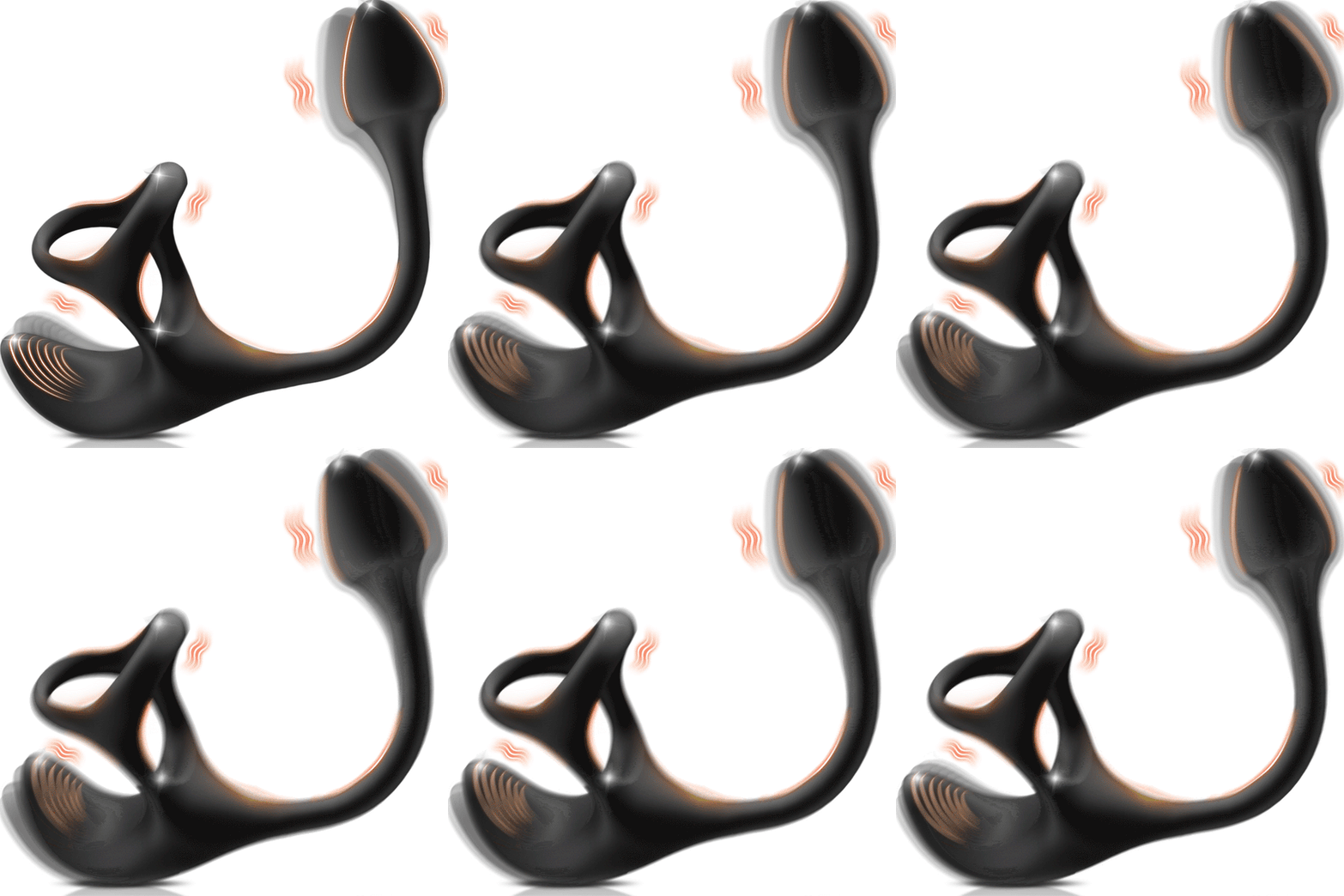
Anal exploration can also become part of a couple’s toolkit when curiosity and communication are present. A multi-function device like Zenith - Vibrating Anal Plug Prostate Massager with Penis Rings offers stimulation for the penis, perineum, and anal area at the same time. The design combines a silky bullet-style anal plug, a triangular ring, and a testicular loop, powered by two motors with nine vibration patterns. Used with plenty of lubrication and clear conversation about comfort levels, a prostate massager of this kind can introduce new sensations without sidelining emotional connection. The goal is not to chase more intense stimulation just for the sake of novelty, but to create fresh ways to enjoy each other that fit the couple’s values, boundaries, and current season of life.
Why Does Sex Feel Good? The Science of Pleasure
Sex feels good for more than one reason, and most of those reasons come down to how the body and brain talk to each other. When arousal starts, the nervous system sends signals that increase blood flow, muscle tension, and sensitivity in areas that respond to touch. Heart rate picks up, breathing deepens, and skin may flush slightly. In people with vulvas, the clitoris and inner labia swell and the vagina produces more lubrication. In people with penises, blood flow builds an erection and the scrotum tightens. All of that makes the body more responsive to touch and pressure, setting the stage for stronger sensations as stimulation continues.
As arousal keeps building, the body moves into a plateau phase. Muscles stay tense, breathing stays fast, and many people notice small spasms in the hands, feet, or face. In vulva owners, the clitoris can become so sensitive that direct stimulation feels intense or even uncomfortable, which is why some prefer indirect touch through the clitoral hood during this phase. Vaginal walls darken in color and swell more. In penis owners, the testicles pull closer to the body, and pre-ejaculatory fluid may appear. The whole system is basically hovering near a tipping point, with nerves, blood vessels, and muscles all primed for a release.
Orgasm is that release. During orgasm, the brain floods the body with a rush of chemicals, including dopamine and endorphins that support pleasure and pain relief, along with oxytocin, which supports bonding and relaxation. Muscles in the pelvic floor contract rhythmically. In people with vulvas, contractions occur in the vagina and sometimes the uterus. In people with penises, contractions happen at the base of the penis and along the reproductive tract, which pushes semen out. Blood pressure, heart rate, and breathing reach a peak and then gradually fall as the body moves into a resolution phase. Afterward, many people feel loose, sleepy, or unusually calm. For vulva owners, continued stimulation can bring another orgasm if arousal stays high. For penis owners, there is usually a refractory period before the body can respond strongly again, and that window tends to lengthen with age.
The brain is just as important as the genitals. Sexual touch sends signals along nerves that reach brain regions tied to reward, emotion, and memory. As those regions light up, the brain strengthens the link between sexual cues and pleasurable outcomes. Rhythm plays a role here too. Repetitive motion or patterned stimulation can create a feedback loop: physical pleasure boosts psychological arousal, which lowers internal barriers and increases physical pleasure again. Over time, the brain starts to recognize certain rhythms, positions, fantasies, or sensations as “sex cues,” which is why a familiar touch or favorite thought can trigger desire so quickly. When partners use this knowledge to listen to their bodies instead of forcing a script, it becomes easier to shape sex around real pleasure instead of guesswork.
The Real Benefits of a Healthy Sex Life
Sex gets marketed as something fun and wild, but it also behaves a lot like exercise, meditation, and a cuddle session rolled into one. Regular, wanted sex—solo or with a partner—can support the body in ways that go far beyond the bedroom. Heart rate climbs, muscles work, breathing deepens, and blood vessels open up. That short cardio burst helps circulation and can support cardiovascular health when it fits into an overall balanced lifestyle. Some research links regular sexual activity with a lower risk of certain heart problems in men and with better overall well-being in both men and women, especially when sex happens in the context of a caring relationship rather than constant stress.
The immune system also responds to a healthy sexual rhythm. People who report a steady sex life often show higher levels of certain antibodies that help the body respond to common infections. Sex is not a magic shield against illness, of course, but the mix of moderate physical exertion, hormonal shifts, and emotional comfort can gently nudge the body toward better resilience. During arousal and orgasm, the body releases endorphins, which are natural pain modulators. For some people, that means headaches, cramps, and tension feel lighter after a satisfying sexual encounter. Others notice that regular pleasure helps loosen tight muscles in the neck, back, and hips.
Sleep is another big area where sex makes a difference. After orgasm, oxytocin and prolactin rise while stress hormones drop, which creates that familiar relaxed, drowsy state. Many people fall asleep faster and sleep more deeply after they climax. For partners who struggle to turn their brains off at night, a calm, affectionate sexual ritual can work as a reset button. That does not mean sex has to turn into a sleep hack on demand, but it explains why a good orgasm sometimes succeeds where scrolling a phone fails. For people who prefer solo time, masturbation can offer the same kind of reset without the complexity of navigating another person’s mood every time.
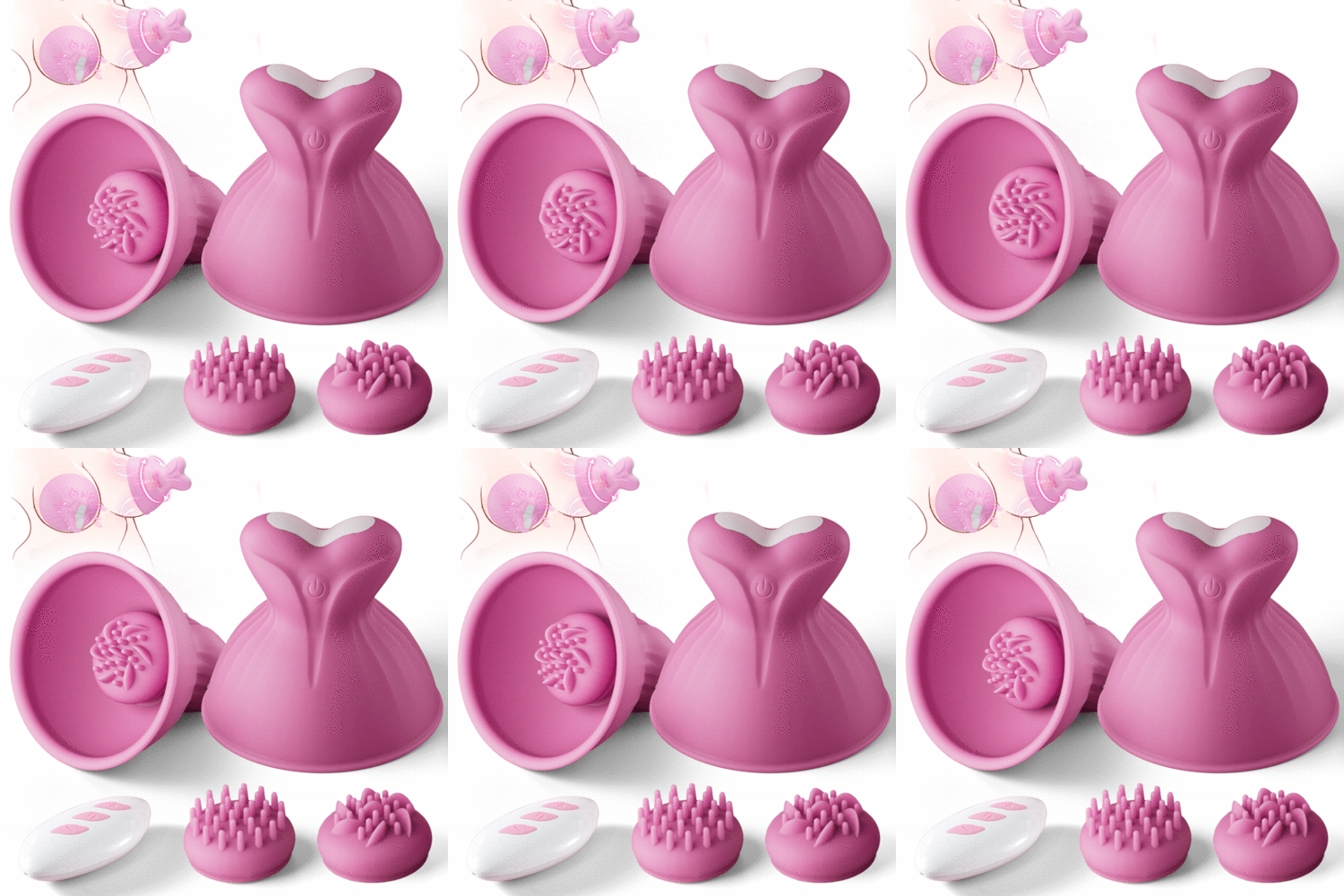
Sex also interacts with mood and mental health. Regular, consensual sex often correlates with lower perceived stress and better overall life satisfaction. That is partly chemical: dopamine and serotonin help regulate mood, while oxytocin supports feelings of closeness and safety. It is also relational. Feeling desired, being touched with care, and having a predictable way to reconnect can make daily stressors feel more manageable. When partner sex is not available or does not feel right in a given season, self-pleasure can still play a supportive role. A clitoral and nipple vibrator such as Ramsdell 10 Biting Modes & 10 Vibrating Speeds Stimulate Nipple Clitoral Women Vibrator can turn solo sessions into a focused stress release ritual. The red-lip design can cover the clitoris and nipples, delivering gentle bites and tongue-like pulses that help the body drop tension without rushing or forcing arousal.
For people who enjoy breast-focused stimulation, a nipple massager like Acmejoy - 10 Pinching 10 Vibrating Nipple Toys or Acmejoy - 7 Vibrating & Rotation Nipple Toys with Replaceable Message Head can add another layer to body awareness. The petal-shaped cups or rotating heads wrap around the breast and massage tender tissue with adjustable patterns. Used with intention, a nipple vibrator encourages slower breathing, deeper presence, and a more nuanced understanding of what kind of touch feels nourishing instead of overwhelming. That kind of self-knowledge carries over into partner sex, making it easier to say, “This feels good, keep going,” or “That pressure is too much right now,” which is key for long-term sexual satisfaction.
Hormones respond to sexual activity as well. In men, testosterone levels rise and fall in rhythms that interact with arousal, energy, and mood. In women, estrogen, oxytocin, and other hormones shift around the menstrual cycle and in response to sexual connection, which can influence libido and vaginal comfort. A healthy sex life does not mean chasing constant arousal, but respecting those rhythms instead of fighting them. On some days the body is eager for intense stimulation; on other days gentle touch, cuddling, or slow solo play meets the need for connection more effectively. When sexual behavior follows the body’s signals rather than an outside rule about how often people “should” be having sex, pleasure tends to feel more grounded and health benefits are more sustainable.
When Sex Becomes “Too Much”: Risks of Imbalance
Healthy sex supports the body and mind. Pushed too far, sex can start to work against both. The body treats sex as a demanding activity that burns calories, raises heart rate, and floods the bloodstream with stress-related hormones like adrenaline and cortisol during arousal. In the right dose, that spike is part of the fun. When intercourse or intense masturbation happens many times in a short window, the body may not get enough time to return to baseline. Fatigue, difficulty focusing, and sluggish mornings can follow long nights of repeated climax. If that pattern becomes routine, energy for work, exercise, and social life can drop, even if desire stays strong.
Genitals carry their own limits. Repeated friction without enough lubrication or rest can irritate sensitive tissue. People with vaginas may notice soreness, swelling, burning during urination, or spotting when sexual activity stays frequent and rough. In some cases, the vaginal lining can develop tiny tears, which create discomfort and raise infection risk. People with penises may experience shaft irritation, soreness at the tip, or a dull ache in the testicles or lower back after extended use. Over time, pushing through discomfort can turn sex into something the body associates with pain instead of comfort, which tends to lower desire later on.
The urinary tract is another area to watch. Bacteria can travel more easily into the urethra during frequent intercourse, especially when there is not much time between encounters or when hygiene slips. People with shorter urethras, such as most women, face higher odds of urinary tract infections when sexual frequency climbs and bathroom habits or hydration do not keep pace. Symptoms like burning during urination, cloudy urine, or pelvic pressure are signals to slow down and seek medical advice, not signs to push harder in pursuit of “stamina.”
Sexual function can also react to excess. When orgasm and ejaculation happen over and over with little rest, the nervous system sometimes responds by dulling sensation. Erections may feel less firm, climax may arrive too quickly or take much longer than before, and arousal may feel harder to maintain. For some men, heavy reliance on high-intensity stimulation during solo play can make it harder to respond to slower, more nuanced touch with a partner. A realistic masturbator such as Captain Titan – Masturbator with 5 Suction Levels, 9 Vibration Modes or Challenger - 10 Vibrations, 5 Suctions, Ultra-Realistic Vagina Masturbator can be helpful when used with awareness of that risk. Adjustable suction and vibration settings let users dial down intensity, experiment with gentler patterns, and practice pausing before climax instead of racing toward it. Used that way, a male masturbator becomes a training tool for control, not a shortcut into overstimulation.
Deep-throat style strokers like The Captain - 10 Vibrating Sucking Deep Throat Male Stroker sit in the same category. Strong suction and tight channels can deliver a convincing fantasy and serious relief after a stressful day. If a session with a male stroker turns into the only reliable way to climax, though, it may be time to step back and vary the routine. Switching to lower vibration levels, adding more manual touch, or spacing out sessions helps the nervous system stay flexible. That flexibility is what allows the body to enjoy both solo stimulation and partnered intimacy without needing one specific type of intense input every time.
Psychological signs of “too much” matter as much as tired muscles or sore skin. When thoughts about sex crowd out other interests, when irritability spikes every time a partner declines, or when masturbation feels driven more by anxiety or emptiness than by desire, sexual energy is no longer working in a supportive way. In that state, more frequency rarely solves the problem. Often, what helps is a mix of rest, honest reflection, and, if needed, a conversation with a therapist or sexual health professional. A balanced sex life leaves room for work, hobbies, friendships, and rest. If sexual behavior starts to shrink that space, the body and mind are asking for adjustment.
How to Cultivate “Good Sex” in Real Life
Good sex does not start in the bedroom. Good sex usually starts with how a person relates to their own body and to their partner during ordinary days. When people pay attention to stress levels, energy, sleep, and emotional state, sexual encounters tend to feel more grounded. Pushing for intercourse on days when the body feels exhausted or the mind feels overloaded often leads to tension or disappointment. Letting desire ebb and flow with life makes room for different forms of intimacy: cuddling on a rough day, a long make-out session when penetration does not feel right, or solo play when partners are on different schedules. Treating sexual energy as one part of overall well-being, not a separate performance zone, is a big shift toward healthier experiences.
Communication matters just as much as technique. Many people never learned how to say, “Slower,” “Softer,” “Stay right there,” or “I am not in the mood tonight, but I still want closeness.” Without that language, sex can quietly drift into habit, with each person guessing what the other wants. Short, honest check-ins help: asking, “Does this feel good?” in the middle of oral sex, or saying, “I like when your hand is here,” during penetration. The goal is not to deliver a detailed review every time, but to build a culture where feedback is welcome rather than awkward. Over time, those small exchanges create trust, which lowers anxiety and allows arousal to grow more naturally.
Self-knowledge is another foundation. Solo exploration gives a person direct information about what kind of touch, pressure, and rhythm feel right. A clitoral and nipple vibrator such as Ramsdell with ten biting and ten vibrating modes can serve as a guided tour of sensation. Covering the clitoris or nipples with the soft red-lip design and cycling through different settings shows where the line lies between gentle teasing and too much intensity. Breast-focused stimulators like Acmejoy’s petal-shaped nipple massager or the rotating nipple toys with replaceable heads offer similar insight. When someone knows how the body responds to pinching, circling, or kneading, it becomes easier to guide a partner with confidence instead of hoping they guess correctly.
For men, cultivating good sex often includes redefining what counts as “success.” When the focus stays locked on staying hard or lasting a certain number of minutes, anxiety rises and pleasure drops. Supportive tools can help shift attention to shared sensation rather than performance. A vibrating penis ring such as SemenSentry with its three lock rings and nine vibration modes can help maintain firmness while also stimulating a partner during thrusting. Used with lubricant and clear agreement, a cock ring of this kind turns intercourse into a team activity instead of a solo endurance test. Couples who enjoy exploring more adventurous stimulation can experiment with a prostate-focused design like Zenith, which combines an anal plug, penis ring, and testicular loop in one silicone structure. When both partners stay curious and communicative, anal and perineal stimulation can broaden the pleasure map rather than replace existing touch.
Good sex also has limits built into it. That means learning to pause when pain shows up, taking breaks when breathing feels strained, and accepting that not every encounter needs to end in orgasm for both people. Some nights, affectionate touch and partial arousal still count as satisfying intimacy. Building in rest days after an intense period of sexual activity protects the nervous system and genitals, making future sessions feel better instead of dulled. When partners treat sexual connection as an ongoing conversation rather than a fixed script, they can keep adjusting to changing bodies, life stress, and shifting libido without slipping into blame or shame.
Product Guide: Tools That Support a Balanced Sex Life
Sex toys can look like pure entertainment, but the right design used with intention can support body awareness, reduce anxiety, and help partners reconnect with pleasure in a healthier way. The key is matching a product to a real need: learning what feels good, easing performance pressure, or adding new sensations without disconnecting from emotions. A well-chosen masturbator, vibrator, or cock ring is not a replacement for communication. Instead, a thoughtful product can act like a training partner or an extra source of input while the mind stays focused on consent, comfort, and shared enjoyment.
For many women, solo exploration is the first step toward more fulfilling partner sex. A clitoral and nipple vibrator such as Ramsdell 10 Biting Modes & 10 Vibrating Speeds Stimulate Nipple Clitoral Women Vibrator offers layered stimulation that can be dialed up or down depending on mood. The red-lip cup can cover the clitoris or breast and switch between ten biting patterns and ten vibration speeds, which helps map out where gentle suction, fluttering contact, or firmer pressure feels best. Breast-focused designs like Acmejoy - 10 Pinching 10 Vibrating Nipple Toys and Acmejoy - 7 Vibrating & Rotation Nipple Toys with Replaceable Message Head turn the chest into an active pleasure zone rather than an afterthought. Petal-shaped cups that pinch and pulse or rotating heads that knead in circles can show how nipple and breast touch feed arousal, which gives clearer guidance during foreplay with a partner.


Men who want to understand their own arousal patterns often benefit from structured solo sessions. A realistic canal such as Captain Titan – Masturbator with 5 Suction Levels, 9 Vibration Modes surrounds the penis with soft TPE and lets the user experiment with layered suction and vibration while practicing slower thrusts, edging, or stopping before climax. That kind of masturbator can be used not only for release but also for training control and comfort with sensation. A deep-throat focused stroker like The Captain - 10 Vibrating Sucking Deep Throat Male Stroker mimics oral sex with a detailed mouth opening, ten vibration modes, and five suction levels. When used mindfully, a male stroker of that type can help someone notice when tension builds in the body and how to relax into pleasure instead of clamping down. For those curious about a more explicit vaginal feel, Challenger - 10 Vibrations, 5 Suctions, Ultra-Realistic Vagina Masturbator uses a 1:1 vulva replica and a multi-layered inner canal, creating distinct zones of texture that reward slower exploration rather than rushed movement.


Couples who want to bring erotic products into shared encounters can look for designs that benefit both bodies at once. A vibrating ring such as SemenSentry - Vibrating 2 IN 1 Cock Ring combines three lock rings with a half sleeve and nine vibration modes. The structure can help maintain erection firmness by restricting blood flow while the vibrating head stimulates a partner during penetration. Because the ring takes on some of the “staying hard” work, mental pressure around performance can ease, which often improves sensation for both sides. For partners who like to mix technology with intimacy, Acmejoy - Couple Use APP Control 10 Vibrating Male Silicone Penis Ring adds app-based control to the equation. One person can adjust ten vibration frequencies from a phone, turning intercourse or foreplay into a playful game of surprise pulses and patterns. Used with open communication, app-controlled cock rings can encourage more verbal feedback and shared laughter instead of silent stress.


Anal and prostate stimulation can add another dimension when trust is strong. Zenith - Vibrating Anal Plug Prostate Massager with Penis Rings functions as a four-in-one tool: anal plug, penis ring, testicular loop, and bullet-style vibrator. Two motors deliver nine vibration patterns that reach the prostate, perineum, and shaft. When paired with plenty of lubricant, slow insertion, and clear safe words, a prostate massager like Zenith allows a couple to explore new types of orgasm or blended sensations while staying anchored in care and consent. The goal with every product—whether a G-spot vibrator, nipple massager, male masturbator, or couple’s ring—is the same: support a sex life that feels more informed, more balanced, and more connected to the rest of a person’s physical and emotional health.
Conclusion: Rethinking “Good Sex” on Your Own Terms
Sex can look simple from the outside: bodies touch, nerves fire, orgasms happen, everyone goes home satisfied. Under the surface, sex is a flow of energy that touches nearly every part of life. It shapes how people feel about their bodies, their worth, and their relationships. It can comfort, heal, and reconnect. It can also drain, confuse, or reinforce old wounds if it becomes a way to run from stress instead of facing it. That is why pleasure alone is not a strong enough guide for what counts as “good sex.” Pleasure matters, but so do consent, emotional safety, physical health, and the long-term impact on mood and self-respect.
Good sex, in a broader sense, usually feels aligned. The body feels respected, not pushed past its limits. Desire feels owned from the inside, not demanded by a partner or dictated by social expectations. Afterward, the emotional tone leans toward calm, closeness, or simple satisfaction instead of guilt, emptiness, or agitation. Good sex can be frequent or rare, wild or quiet, solo or shared. The common thread is that sexual energy supports rather than sabotages the rest of life. Sleep improves, stress feels a little lighter, and relationships feel a bit safer and more honest.
Bad sex does not always look harsh or dramatic. Sometimes it hides behind intense chemistry, impressive stamina, or a long list of techniques. The warning signs show up in other places: a nagging sense of disconnection, resentment about unspoken pressure, or a growing dependence on sex to feel okay for a few hours. When sex starts to pull a person away from friends, hobbies, work, or inner peace, something in the balance has shifted. That shift is not a moral failure. It is a signal. Bodies and minds are asking for adjustment, for more rest, more honesty, or more support.
Erotic products, from G-spot vibrators to male masturbators and couple’s rings, sit inside this same framework. A product can serve as a bridge toward better communication, more body awareness, and shared curiosity. A product can also become part of an escape loop when it is used only to numb stress or replace connection. The difference lies in intention and context. When someone brings a vibrator or stroker into their life with a spirit of learning—“What does my body like?” “How can we enjoy each other more kindly?”—the device becomes a tool for growth. When someone reaches for any form of stimulation to avoid feeling anything else, the same device can deepen the rut.
No single article, expert, or product can define good sex for every person. Bodies differ. Trauma histories differ. Relationship styles differ. What remains fairly steady across those differences is this: sex feels healthiest when it honors consent, respects limits, supports health, and fits into a life that includes many sources of meaning and joy. With that lens, pleasure stops being the whole story and becomes part of a bigger one—where erotic energy is not just something to chase, but something to integrate into a life that feels genuinely worth living.